|
Dr.
Patrizia Collard |
||
| Latest News: | ||
| 2018 | For information about upcoming courses and workshops please visit www.entermindfulness.com or click the picture below | |
|
|
 |
|
| 2017 | Platz 2 SPIEGEL-Bestsellerliste Taschenbuch Sachbuch | |
|
|
März 2017 |
|
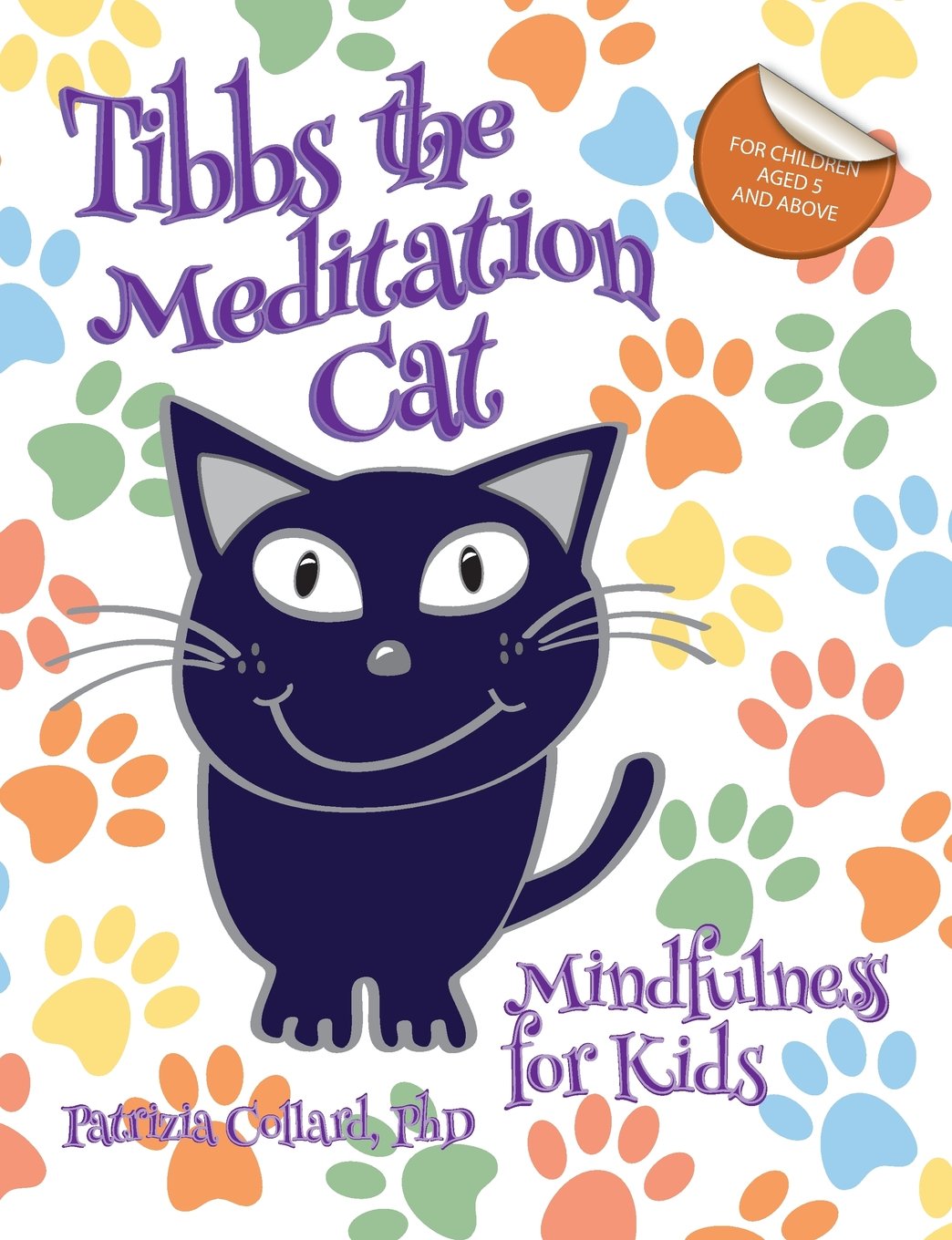
| 2016 | Tibbs the Meditation Cat: Mindfulness for Kids | |
|
|
Tibbs the Meditation Cat: Mindfulness for Kids There’s a strong sense that mindfulness might also contribute meaningfully to young people’s wellbeing, resilience and character-development. In addition to assisting with the acquisition of a number of skills and capabilities, it’s considered that mindfulness might also serve to raise educational standards. So, what exactly is it that has caused so many of us – even all-party government committees – to stand up and take notice? After all, mindfulness can be a big word – and a big concept – for many of us to take to heart. With kids, especially younger kids, it’s enough to say that mindfulness is about awareness. It’s nothing more than noticing our present-moment feelings, our thoughts, and how our body feels. Even more exciting, pretty much anybody can learn its basic principles. It’s not the least bit necessary to know one jot about the historical developments and the links to meditation – or to study the emerging body of research that seeks to explain the ‘science’ behind the timeless principle of mindful awareness.
With regular and shorts bursts of practice,
you’ll find that ‘being mindful’ amounts to a set of simple techniques
that soon become second nature. Eventually it’s easy to go back to that
‘place’ of focus – and kids of all ages (maybe you include yourself in
this category) can learn to do this entirely of their own accord, just
like Tibbs the Meditation Cat!
|
|
| 2016 | Platz 2 SPIEGEL-Bestsellerliste Taschenbuch Sachbuch | |
|
|
Das kleine Buch vom achtsamen Leben von Dr. Patrizia Collard ist nun auf Platz 2 der Spiegel-Bestsellerliste Taschenbuch Sachbuch. |
|
| 2016 | Book review / Rezension: Patrizia Collard, Das kleine Buch vom achtsamen Leben | |
|
|
http://www.evidero.de/das-kleine-buch-vom-achtsamen-leben |
|
| 2016 | Patrizia Collard, Das kleine Buch vom achtsamen Leben | |
|
|
Patrizia Collards
The Little Book of
Mindfulness ist bei Heyne Random
House nun
auch auf Deutsch erschienen mit dem Titel:
|
|
| 2016 | Vienna new course: Let go and Be | |
|
|
New Course starting in October (taught over
two week-ends and an extra practice day in December, covering the material
developed initially for MBCT and MBSR in addition to other helpful Self
Compassion practices).
Should you experience financial restrictions
please write to Dr. Collard at
stressminus@yahoo.com and we
will find a way. |
|
| 2016 | New course: LiveYourLife | |
|
|
This course is designed for indiviuals who
wish to explore the possibility of change and freshness in how they are
presently living their live. |
|
| 11/2015 | UPDATED DATES for Mindful Self-Compassion 2016 | |
|
|
20th January, 27th January, 3rd February,
10th February, 24th February, 2nd March - 6.00 pm to 9.00 pm (Sessions
1-6) 5th March - 2.00 pm to 6.00 pm (half day practice) 9th March, 16th March - 6.00 pm to 9.00 pm (Session 7-8) Details for this course can be found on our websites: http://stressminus.co.uk/english/workshops.htm http://stressminus.co.uk/stressminus_frame_workshops.htm http://www.entermindfulness.com/workshops (More courses to be confirmed.) |
|
| 2015 | We’re very pleased to confirm the following course dates for 2015/16 | |
|
|
9-13 September - MBCT Teacher Development (Part 2) 16 September (1st of 9 dates) – Mindful Self-Compassion (see course details for full list of dates) 21 September – Evening Meditation 26 September – CBT Elements in MBCT 3 October (1st of 5 dates) – Introduction to MBCT (see course details for full list of dates) 21 October – Evening Meditation 11 November - Evening Meditation 7 December - Evening Meditation 13 January 2016 - Evening Meditation 20 January 2016 (1st of 9 dates) – Mindful Self-Compassion (see course details for full list of dates) Details for all these courses can be found on our websites: http://stressminus.co.uk/english/workshops.htm http://stressminus.co.uk/stressminus_frame_workshops.htm http://www.entermindfulness.com/workshops (More courses to be confirmed.) |
|
| 2015 | The Little Book of Mindfulness #1 Best Seller in Spirituality amazon.co.uk | |
|
|
'The little book of Mindfulness' has reached No1 of Top Ten Bestseller |
|
| 2015 | Meeting at the House of Lords | |
|
|
Dr Collard was recently invited to attend a meeting at the House of Lords |
|
| 2015 | The Little Book of Mindfulness #1 Best Seller in Spirituality amazon.co.uk | |
|
|
Dr Collard’s ‘The Little
Book of Mindfulness’ is currently (January 2015) the
|
|
| 2014 | We’re very pleased to confirm the following course dates for 2014/15 | |
|
|
Evening Meditation: 29th October 2014 10th December 2014 MBCT Teacher Development – Part 1: 21st-25th May (London) 2015 25th-29th June (Nottingham) 2015 17th-21st July (London) 2015 MBCT Teacher Development – Part 2: 9th-13th September (London) 2015
Details for all these courses can be found
on our website: |
|
| 2014 | 15-16 March 2014 CBT and Mindful Movement (Teacher Development – Part 3) | |
|
|
Please note the following
change to the course entitled: CBT and Mindful Movement (Teacher Development – Part 3 Module). Namely, the venue has now changed, and the course will be taking place at our London venue in Honor Oak Park, SE23. |
|
| 2014 | Lecture on Mindfulness by Dr Patrizia Collard | |
|
|
In this half-hour long lecture, Dr Collard
discusses the use and benefits of mindfulness in maintaining a healthy way
of life. Published on Jan 13, 2014
|
|
| 2013 | MBCT Teacher Development - Part 1 | |
|
|
2-6 May 2013: Unfortunately this event has
been cancelled.
Upcoming Dates: 18-22 July 2013 - Honor Oak
Park, SE23 (London) |
|
| 2012 | Introducing My New Website www.entermindfulness.com | |
|
|
Dear Friend, I’d like to introduce my new website ! www.entermindfulness.com I hope that you will find my new website both helpful and easy to use. On this website, you will find: Information about upcoming courses and workshops. Resources to help you practice mindfulness meditation yourself. Rates for individual coaching and therapy sessions. News and updates about Dr Collard’s practice and the world of MBCT. Dr Patrizia Collard  |
|
| 2011 | Patrizia Collard: What is mindfulness? | |
|
|
This short presentation
attempts to give a brief definition of mindfulness and its therapeutic uses in coaching and psychotherapy. Finally it offers a brief practice to follow. 2 May, 2011
Comments |
|
|
Conference presentations 2008 - 2012 |
||
| Mindfulness at Work, 1st Annual Conference. 10th February 2012, Robinson College, Cambridge UK | ||
|
Brain based approaches to
improving employee resilience and productivity For more info. www.mindfulnet.org |
||
|
Dr. Collard organised and lectured at “Mindfulness
and Well Being: from Spirituality to Neuroscience” 20th and 21st November 2009 at University of East London |
||
|
About the Conference Date: 20th and 21st November 2009 Venue: UEL Stratford Campus Medical and psychological research and interventions have been integrating mindfulness tools since the late 1970s and to date there are more than 900 publications supporting the validity and breadth of this healing approach. Thus one could argue that the time is ripe to look at mindfulness interventions in more detail and from a number of different viewpoints. The conference at UEL on 20th and 21st November, 2009 aims to introduce both specialists working in healthcare, psychological and preventative care, as well as interested individuals who wish to inform themselves of cutting edge health interventions, to the field and applications of Mindfulness. http://www.uel.ac.uk/mindfulness/index.htm |
||
|
‘When Einstein Met the Buddha Mindfulness Based Cognitive Coaching (MBCC) and its value in Leadership and Executive Coaching’ |
||
|
Keynotes &
Workshops - Executive Coaching |
||
| Older News postings | ||
| For 2008 - 2000 news postings, go here. | ||
| Contacts | |
|
|
Copyright © 2000 - 2012
Stressminus Dr. Patrizia Collard
webmaster:
send an email